Scary Terry's
 
KITCHEN SINK COFFIN
 

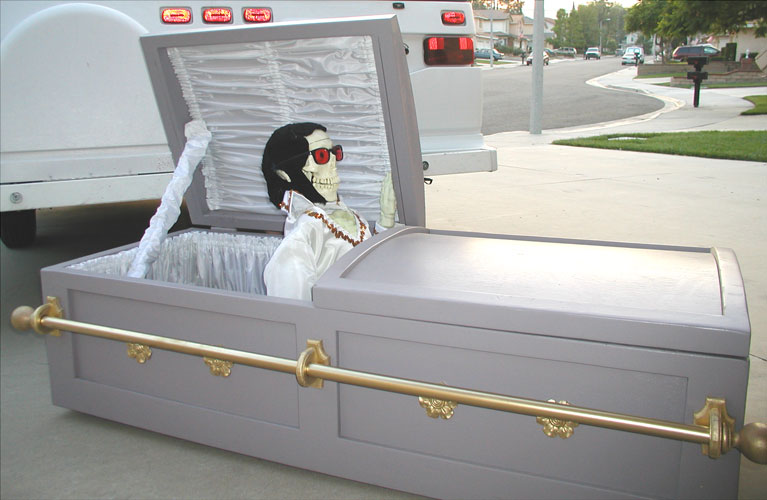
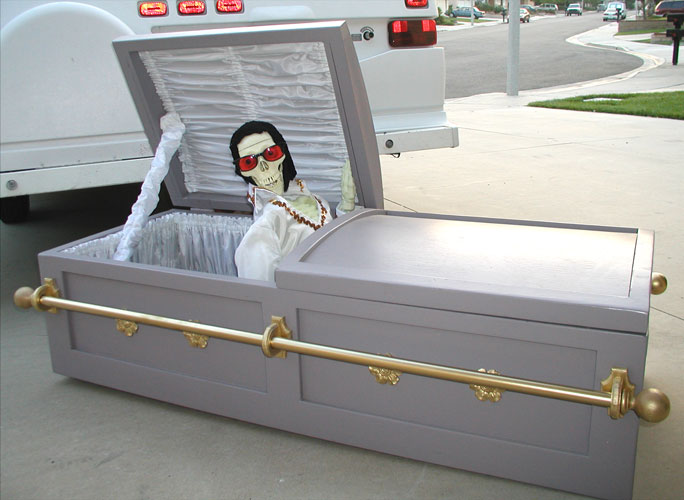
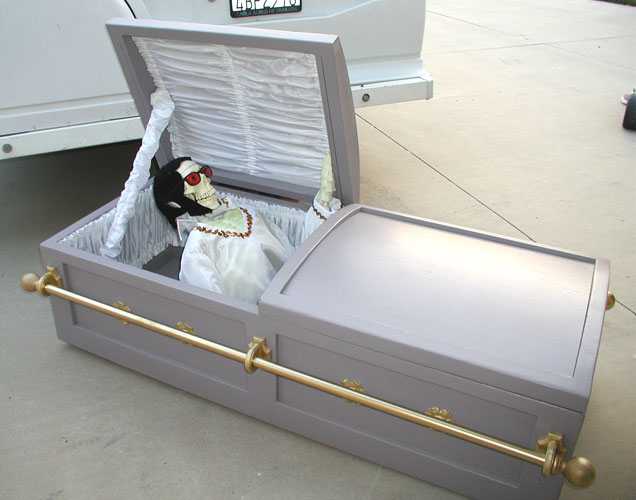
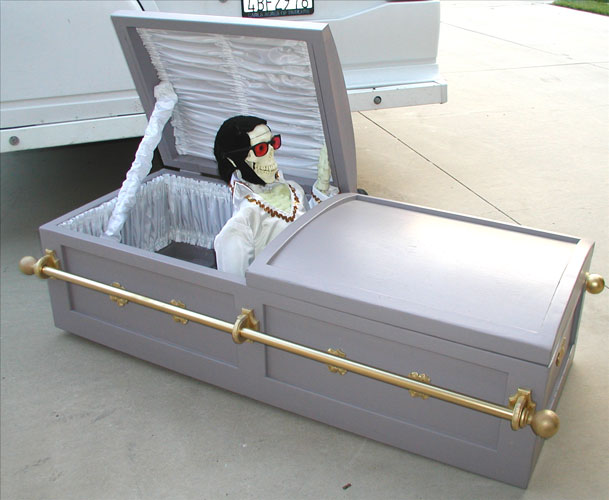
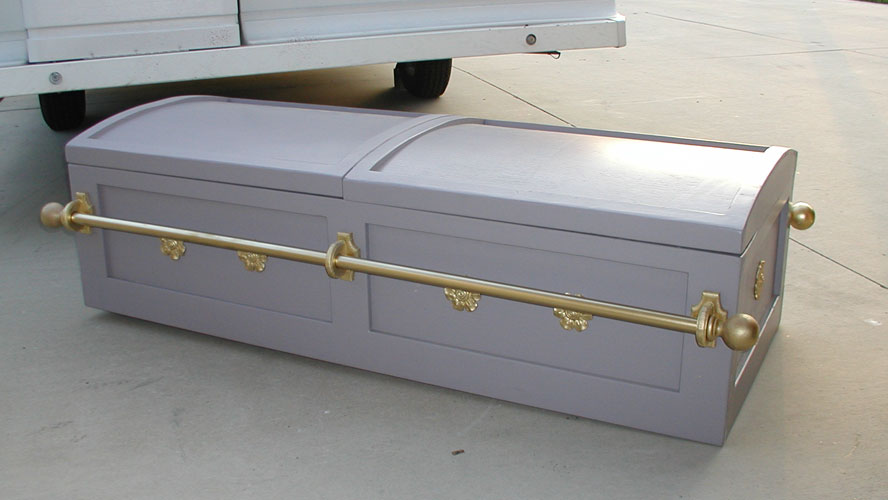
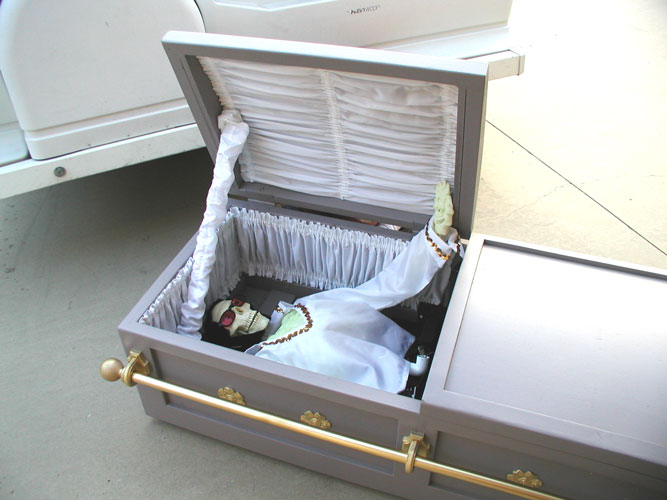
This is a prop I call the "kitchen sink coffin", mainly because it's got nearly everything in it except the kitchen sink. It was inspired byWickedBeernut's (WBN's) Computer Controlled Coffin, which in turn, was inspired by other designs in the past.
Note: The circuit and program have been updated as of 2/2005. See details below.


Here's what the Kitchen Sink Coffin (KSC) does:

  • The coffin starts shaking and you hear some groaning sounds from within.
  • The lid slowly rises and in amongst the fog you'll see "Elvis".


  • With a roar and a scream, Elivs pops up.
  • He then turn his head toward the tot'ers and says "thank you, thank you very much" (his mouth moves in sync with the audio track).


  • He then lays back down to the music "Return to Sender" playing.
  • Once the lid closes, the coffin shakes again and the song "I'm all Shook Up" plays.
  • It concludes with a voice saying "Elvis has left the graveyard".

Here's a short video of the coffin in action.


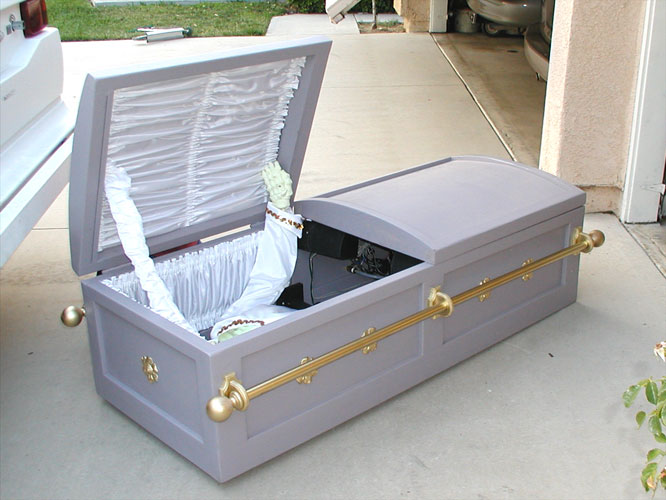
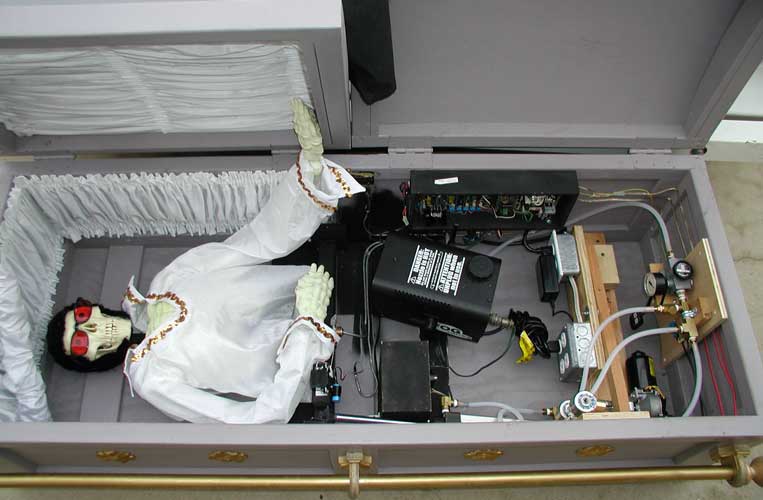
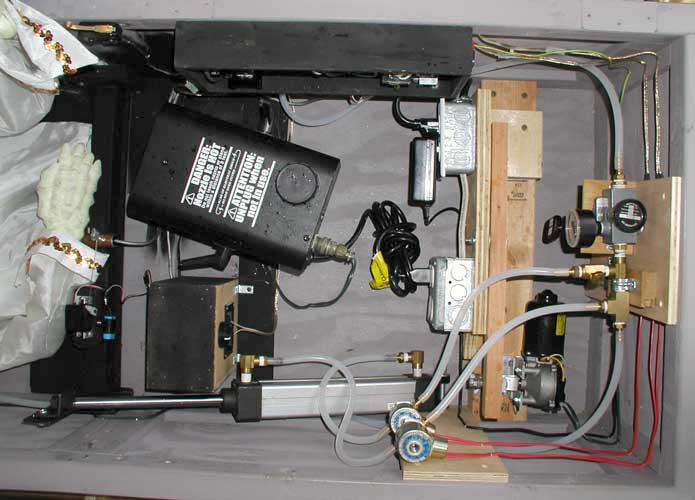
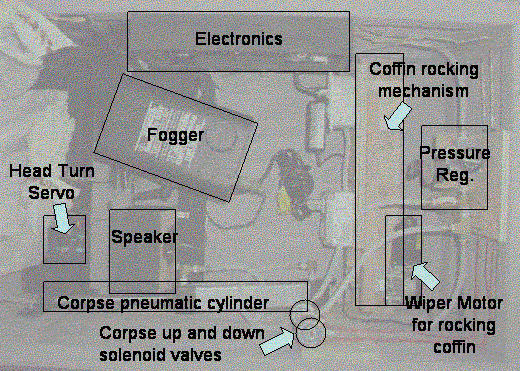
Here's what's inside:

  • 2 pneumatic cylinders controlled by 3 solenoid valves. One cylinder opens the lid, the other cylinder raises and lowers the corpse (diagram of how it works)
  • Pneumatic pressure regulator (everything runs at 35 psi)
  • 1 wiper motor with a cam that "shakes" the coffin (diagram of how it works)
  • 2 servos, one to turn the head, the other to move the corpse's mouth ( how to install a servo in a Bucky skull).
  • ISD 2575 Chipcorder which plays 7 different sound effects (ChipCorder basics).
  • An 18 watt amplifier and speakers.
  • 1 fogger (so fog comes out when the lid is raised)
  • 1 Two channel RF remote control.
  • 1 Basic Stamp 2, which is what controls all of the above.


Update 2/2005: In the old version, the corpse mouth was driven directly by the Basic Stamp. It worked fine, but each mouth movement had to be programmed (a time consuming procedure) and I wanted to be able to change what the corpse said. In the new version, the mouth is driven by an audio/servo driver and will respond directly to sounds. A slight modification to the audio/servo driver (click here for the schematic) allows the driver to be turned on at the appropriate time by the Stamp using the MSE (mouth servo enable) line. I've also linked the end of message (EOM) pulse from the ChipCorder to the Stamp so the program can now be set to wait for the sound to end.

The Basic Stamp program has also been rewritten. Jon Williams of Parallax (the company that makes the Basic Stamp) contacted me and asked if I'd like some help in improving the code. I jumped at the chance as Jon is a well known expert on the Basic Stamp (he writes a monthly column in Nuts & Volts magazine among many other things). The program is now written according to Parallax's "The Elements of PBASIC Style". This is a standardized way of programming to make it easier for others to understand. This kind of support is one of the reasons I choose the Basic Stamp as the microcontroller for my projects.

Here is the programming code for this project.


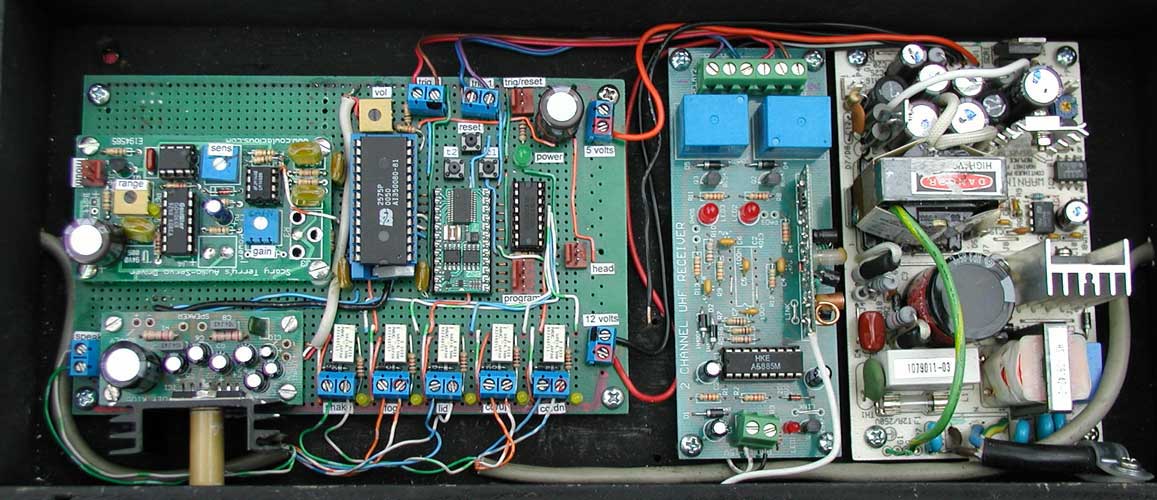
    Here's the circuit board that runs the whole thing. That's the ChipCorder in the middle, the Basic Stamp to the right and the audio/servo driver to the left. The audio amp is at the bottom, left. Click here for a schematic in PDF form.  

    This is the entire electronics package. The item in the middle is a two channel RF remote that allows us to remotely trigger either of the two routines. The item to the right is a switching power supply that provides 5 and 12 volts. This one is from All Electronics. I don't give a part number on this because they sell surplus equipment and their inventory changes all the time, but they usually have numerous switching power supplies to choose from.  

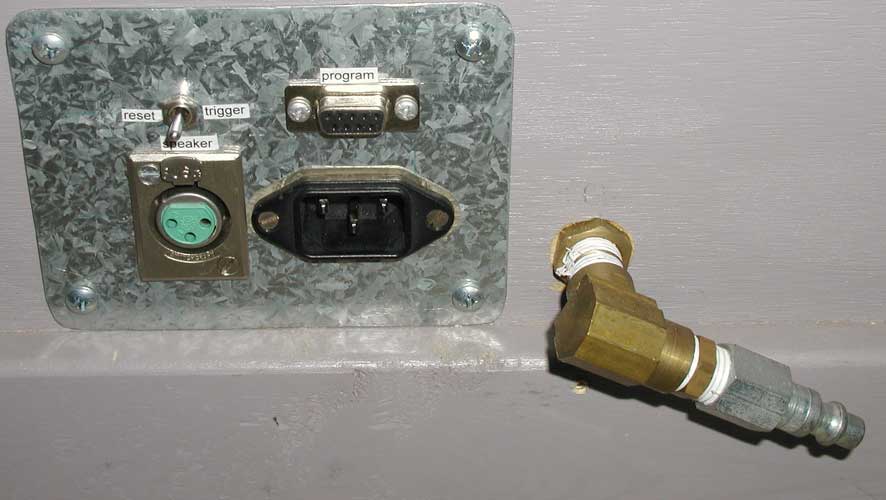
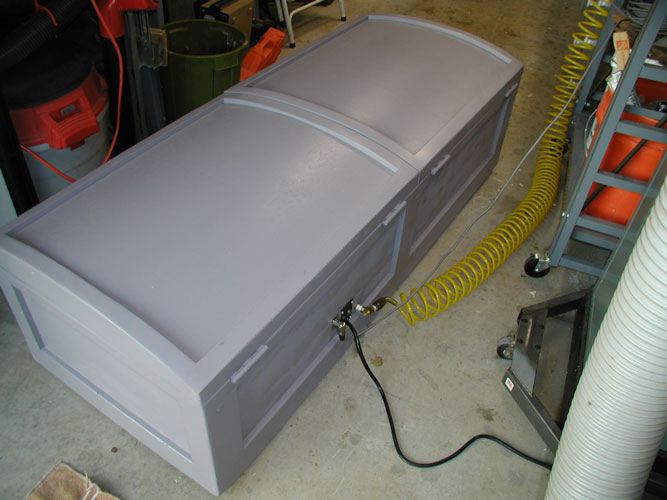
  Here are the external connections for power, an external speaker, programming and air.  

  Halloween Home last update 1/2007